
Serial Title: The Daleks Master Plan
Series: 3
Episodes: 12 (Yes, that’s right- longest serial ever*)
The Nightmare Begins
Day of Armageddon
Devil’s Planet
The Traitors
Counter Plot
Coronas of the Sun
The Feast of Steven
Volcano
Golden Death
Escape Switch
The Abandoned Planet
The Destruction of Time
Doctor: William Hartnell
Companions: Steven Taylor (Peter Purves), Katarina (Adrienne Hill), Sara Kingdom (Jean Marsh),
*Unless you count the Sixth Doctor’s “Trial of a Timelord,” which is one season long story- but also 3 stories bridged by a framing device, so technically not one serial. Maybe.
Synopsis:
With feverish Steven, injured in warfare, and clueless Katarina, a servant from ancient Troy, aboard, the TARDIS hurtles into the unknown, towards a random destination that the Doctor fervently hopes will contain the resources for medical aid necessary to save his ailing companion.
They arrive on Kembel, the planet where Marc Cory died in the stand-alone "Mission to the Unknown," in the year 4,000- A.D., (any of y'all tries to correct me that that "C.E." nonsense, you're banned from this blog for flagrant stupidity...) six months after the events of that story. The Dalek Base there is in full swing, and the delegates therein- representatives from many galaxies- are still meeting with the Daleks to finalize their invasion plans for the... well, the invasion of something. They call it 'The Solar System'- a generic term here used to refer to the Sol System- I.E. Earth's solar system- but they also seem to use that term to refer to the entire galaxy that Earth's solar system resides in... if our galaxy has been renamed "The Solar System," then one of those great and bountiful Human Empires from the Ninth Doctor's television eras must likewise be in full swing... and so must their arrogance.
 Also on Kembel are Brett Vyon and Kert Gantry, Space Agents and co-workers of Cory's, investigating his disappearance. Kert, wearing a shade of grey that, if colorized, would most certainly be red, is quickly picked off by Daleks. The hiding Brett, however, observes the TARDIS landing, and after the Doctor emerges, he earns eternal audience enmity by holding the Doctor up at gunpoint and stealing his TARDIS key. The unaware Katarina is easily duped, and Brett is all set to steal the TARDIS- until Steven, in a brief moment of lucidity, rises and knocks him out. The Doctor returns, restrains him in an ingenious device, and leaves to investigate- and then, seeing a recognizable Earth-ship landing, he returns to the TARDIS.
The ship belongs to Mavic Chen, vaunted and beloved guardian of the Solar System- and a traitor, who, in the guise of vacationing, is actually joining the Dalek's secret meeting, and delivering to them a core made of the incredibly rare metal 'taranium,' the last necessary component for the insidious Time Destructor, the Daleks' new superweapon, and the instrument of their battle plans for Earth.
Taking his companions with him- including Steven, now healed by medicine carried by Brett- the Doctor sneaks into the Dalek compound. Capturing and subduing a wandering delegate, the Doctor disguises himself and attends the Dalek meeting in its place. The delegate escapes and sounds the alarm- but in the confusion, the disguised Doctor steals the taranium core, and the group absconds with Mavic Chen's starship, intent on reaching Earth to warn them (having found the tape Marc Cory left behind in "Mission to the Unknown" detailing the Dalek invasion plans).
However, the ship is forced down by Dalek remote-control onto the nearest planet, Desperus- a penal colony world of the type favored by sci-fi: a planet with only an entrance and no way off, let the prisoners rot, form societies, or do as they will. (ST: VOY - "The Chute", Stargate SG1 - "Prisoners", etc.) There is only one way off of such worlds: waiting for a protagonist to arrive, and sticking with them. Even then, if a noble sacrifice is required, you may not make it.
 Well, the protagonists have arrived, and their way off is clear- repair the ship and wrest it from Dalek control. (The ship was set down gently as the Daleks need them alive to recover the rare and vital taranium in their possession.) The prisoners are held at bay by an electrified hull, and the ship lifts off again... but a noble sacrifice is indeed required. A convict has managed to sneak into the airlock, and takes Katarina hostage, demanding the ship deviate from it's course and return to Kembel so that he can escape. Katarina eliminates this threat to Earth and deterrent to their mission by cycling the airlock, expelling both herself and the hijacker into space. The Doctor mourns as they continue on with their mission, setting course for Earth. (NFS: Let me just say... Katarina's death is one of the SCARIEST ever things I've seen, I got sick chills seeing that! It was the way the reconstruction did it it was vastly creepy.)
The Daleks (who have lost one pursuit ship in a failed Desperus landing, blown up the second for failure, and also killed the delegate who allowed himself to be captured... this is one bloodbath of a serial!) send Mavic Chen on ahead to have the group arrested as traitors the moment they arrive on Earth, to prevent them warning anyone. Chen dispatches loyal Space Agent Sara Kingdom to capture and silence them- executing if necessary. (NFS: Who officially has the most awesome name in Doctor Who....mostly the last name part....and besides Bannakaffalatta of course....also Jean Marsh looks ALOT better when she's not being Bavmorda from Willow....I mean...she looks a pretty-pretty gooooood.)
Brett's contact on Earth turns out to be a turncoat working for Chen, and Brett himself is killed in a shootout when a confrontation and resistance of arrest with Sara turns deadly. She pursues Steven and the Doctor into an experimental chamber that is supposed to be sealed off... just in time for the experiment to activate (using the Spiderman-3 "If the test is scheduled it will proceed no matter what, we won't even check the launch site beforehand" workplace safety code, apparently)- an experimental transportation beam that converts all matter in the room into energy, transmits it to a nearby planet, Mira.
 Now stranded on Mira with the fugitives, Sara is forced to listen to the truth of Chen's treachery and his betrayal of Earth, and expresses deep regret in her role in the incident- especially the killing of Brett, who in reality was her brother (!!!)- while Chen pretends that he staged the whole thing intentionally, sending the group to an alien planet, stranded, where they cannot warn anyone of the coming invasion, and where the Daleks can visit at their leisure to retrieve the intact taranium core.
Both the Dalek retrieval team and the Doctor's party are menaced by the Visians, invisible brutes that inhabit Mira. The heroes manage to steal a Dalek ship, but this is drawn to Kembel. While en route, the group attempts to construct a false taranium core- Steven's hot-headed insistence that gravitic energy (a cutting edge technology in his time, but now discarded for being too unstable) successfully completes the duplicate, injuring him and encasing him in the gravitic force-field. This is used to their advantage on Kembel, using a standoff to reach the TARDIS, with Steven, left behind last, handing over the fake taranium and making a run for the ship- his force-field protecting him from the inevitable Dalek double-cross.
The TARDIS flees, and is pursued (as the Daleks have discovered that they've been duped by a fake, powered up to give off false positive readings of taranium) by the DARDIS, presumably a new model built after the events of "The Chase." The ship lands in an unknown location that the Doctor warns contains an 'entirely poisonous!' atmosphere.
And here, we reach the infamous first Christmas episode of Doctor Who. It was designed to be modular, so that it could be removed from the storyline completely without affecting it. If removed (as it was for oversees... or over-continent broadcast, in Middle-eastern countries, Japan, etc.), then this 'poisonous atmosphere' is clearly referring to the volcanic planet of the titular 'Volcano' episode, leading directly into it. (See below.)
However, in actuality, it's a humorous social commentary, as the TARDIS arrives in 'modern' (1960s) London- the Doctor is reading the high pollution content in our air. (They never get tired of that one, do they? Dang smug future people and their condescending remarks about our polluted air, as if we made it that way just because we wanted to...) The Doctor, seen by contemporary police emerging from what appears to be a police box, arrest him as a vagrant apparently unlawfully sheltering in a Police Box during the nights, and he gives a passionate and inspirational dialogue about being a 'citizen of the universe,' before Steven, having found a police uniform in the TARDIS wardrobe, slips in disguised, claims to know this homeless man well from another precinct, and smuggles him out. The group then arrives in 1920s Hollywood, and hijinks involving mistaken identity, stumbling from set to set, and encountering a young Bing Crosby ensue. Finally, the group returns to the TARDIS, taking off again to flee Dalek DARDIS pursuit, and take a moment to drink and toast Christmas. (The Doctor breaks the fourth wall to wish the audience at home a Happy Christmas, too.) (NFS: All in all it was entirely strange and made me think I must've fallen asleep....again.)
 Landing on the volcanic planet Tigus (where the show would pick up, should the Christmas episode have been skipped), the Doctor and company confront the inhabitants of the pursuing time machine... finding to their surprise (and my delight) not the Daleks, but the Meddling Monk (from the serial of the same title), having overcome the sabotage of his TARDIS, and pursued them to have his revenge. He damages the TARDIS lock, stranding the travelers on Tigus- but the Doctor uses his mysterious (and awesome!) blue signet ring to overcome the damage and open the doors. They flee (with the Monk in pursuit), arriving in ancient Egypt, while the Doctor tries to repair the lock. Both the Monk and the Daleks shortly arrive. (NFS: It's not mysterious at all! He's just a servant of the "secret fire" is all...)
The Monk is captured by the Daleks and forced to get the taranium for them or die... as the Doctor slips into the Monk's TARDIS and sabotages it- and also transforming it into a police box shape (though not permanently). After some back-and-forth, Sara and Steven are captured; the Doctor is forced to hand over the taranium in exchange for their freedom. The group flees as the Monk returns to his TARDIS- only to discover that the Doctor has removed his directional unit- causing the Monk's TARDIS to become a  randomly-wandering, uncontrollable, unpredictable vessel just as the Doctor's is. Standing in a frozen wasteland, he vows his revenge... a vow that, over 30 years later, has yet to be fulfilled...
As the TARDIS cannot return to Kemble (I guess the fast-return switch was permanently disabled in the Edge of Destruction?) and is unlikely to land there by random chance, the Doctor hooks up the stolen directional unit into his TARDIS (a dangerous proposition, as it was designed for an incompatible TARDIS model) and activates it- burning out the unit in a tremendous explosion, but returning the group to Kemble, intent on retrieving the taranium and thwarting the Daleks.
The Doctor strikes off alone, and Steven and Sara, soon following, find an empty city and the Daleks' council members betrayed and locked up. Freeing them to spread through the galaxy and warn of the impending Dalek invasion, they begin to search for the Doctor- eventually finding a hidden underground Dalek city, from whence the invasion is being prepared. Mavic Chen, who has become increasingly insane and meglamaniacal, thinking himself in a position to dictate terms to the Daleks, be elected ruler of the galaxy over the other members of the council, and considering himself both invaluable and invulnerable during the DARDIS chase through time, apparently receives his comeuppance when his ship explodes on takeoff- but he reappears, having faked his own death, capturing Steven and Sara and delivering them to the waiting Daleks.
 Chen overplays his hand to the extreme, making lofty and absurd demands of the Daleks while giving sweeping speeches about his mastery of the universe- and eventually, when the Daleks cease being amused by his idiocy and stop playing along, he tries to shoot the Dalek leader and try to take over the Dalek alliance (which has already been dissolved anyhow, what with imprisoning the council and the like...) The decidedly un-amused Dalek leader, unharmed, orders his execution but Chen flees, now having completely snapped, ranting about how he is immortal. (NFS: As they say it's a fine line between crazy and more crazier.)
Meanwhile, the Doctor, having infiltrated the city in secret, appears, and, using Chen's distraction, steals the Time Destructor- holding the Daleks in the room, well aware of it's destructive capabilities, in a standoff (they dare not shoot for fear of setting it off)- getting Sara and Steven released to him, and using a Dalek 'hostage' and the Time Destructor to back out the door and flee. Once he is clear, the Daleks give chase- stumbling upon, and offhandedly exterminating- the now raving-lunatic Chen as an afterthought. A would-be petty dictator with delusions of godhood, offhandedly killed with all of the detached and casual disinterest that the term 'exterminate' implies... a fitting end to an entertainingly colorful yet hissably villainous buffoon.
 The Doctor dispatches Sara and Steven back to the TARDIS- the only safe haven from the deadly field of the Time Destructor, now active. Sara refuses and stays behind, and the two carry the weapon towards the TARDIS, where they hope to defuse it... rapidly aging. As they stumble forward through the destructive effects, Sarah ages from a young woman to an old, and then into death, until even her skeleton, aged hundreds of years, crumbles away to dust and nothingness. (NFS: Once again this was HORRIFYING and an ultimate "behind the sofa" moment for me. It was like...you feel kind of sick it was really well done in a...horrifying way. You just feel like "Well that CAN'T be it! She can't have just died!")
Meanwhile, the Doctor staggers onwards, under the same effects but surviving- barely- due to his much greater lifespan. He collapses just short of the TARDIS, and Steven emerges, attempting to deactivate the deadly device. He instead succeeds in reversing it, saving himself and the Doctor from the worst of the effects, and they refuge in the TARDIS, as  the pursuing Daleks, trying to destroy it, send it out of control, even faster than before, aging themselves to destruction and turning the planet into a dead, burnt-out wasteland before itself burning out. (Well, at least that takes care of the Varga plants...) (NFS: That Sarah Kingdom started out a bit weird but she was a true hero in the end...even if she did kind of...murder her...brother...)
The Doctor and Steven mourn the death toll accumulated in thwarting the Daleks amidst the post-apocalyptic landscape.
"What a terrible waste..."
(NFS: Also it's kind of crazy how the doctor lost like 200 years back there...kind of a waste as well.)
Review:
This 12-part opus does indeed earn the title of 'epic'- well-paced, flowing, with interesting characters, numerous twists, and an awe-filled finale that is marred only partly by the fact that it exists only as stills. In fact, 9 of the 12 episodes are lost... with episode 2 having the distinction of being the most recently located missing episode, returned in 2004 from an engineer that had smuggled the scheduled-for-destruction print out of the studio. (NFS: I dream of finding a lost episode!!!)
The story itself is positively 'New Doctor Who series' in it's death toll... including 3 semi-companions! Katarina is ejected into space- whether an intentional foiling of her captor or an accident is unknown- Brett is shot by his sister, Sara Kingdom, under orders from the villain, and Sara herself is hyper-aged into a skeleton, and then into dust. Kinda shocking stuff- but well-handled throughout. The scene of Katarina spinning away into space is absolutely nightmare-inducing! (NFS: Also....the hyper-aged into skeleton bit was kind of awesome....in a horrifying way...)
The story twists and turns through the Dalek plot- which is, ironically, the most meandering and uninteresting part of the serial; almost a McGuffin to simply move the story from one interesting bit to the next. (NFS: That's ironic???? I might be labeled as the worst Doctor Who fan in LIFE by saying this...but I feel that most Dalek plots ARE uninteresting.)
The highlights, to me, were the return of the Meddling Monk (always an enjoyable foil for the Doctor), the confrontation on the fantastically apocalyptic Volcano planet, and the intense finale when the Daleks' Time Destructor is activated. The first episode is also good, with it's twists and turns of capture and escape. Though I must admit I also enjoyed the Egyptians vs. Daleks battle. (NFS: A winning combination.)
 The opening, Mission to the Unknown, is a decent prologue but utterly superfluous- it adds little to the overall story. It serves much better as what it was- an appetite-whetter for a never-produced pilot for a Daleks vs. Space Security Forces spinoff show.
Other than that... as much as I was anticipating and looking forward to it, it serves little purpose other than portraying that rock guy with a really cool actor- a feat that The Dalek Master Plan, sadly, did not duplicate.
In the first chapter of the serial proper, we are introduced to the most incompetent woman in the galaxy- fatally incompetent at her crucial job of monitoring communications (a life-saving or life-dooming profession)- and also an absurdly bad judge of character, as she idolizes to the point of sainthood the meglomanicial, mentally-unhinged, pompous, strutting villain of the piece. So that's "FAILURE" on all fronts.
The capture/counter-capture was interesting, the ship theft somewhat exciting, and the FX overall quite good. In fact, the effects and model-work throughout this entire story were fairly impressive. I enjoyed Steven conking the intruder, and the Doctor with the upper-hand for once; so often it seems like the majority of serials are spent helplessly, separated from the TARDIS and hiding from the villains... it was nice to have a change of pace, however briefly. Even though they do eventually end up in that tired old predicament- it seems hard for me to swallow that the Doctor would so readily abandon the TARDIS- though in these earlier no-idea-where-it-will-end-up-next days, I suppose there was less of a choice.
The mysterious plant leader of the fourth galaxy- while foolishly arrogant and practically begging to be exterminated- was a very cool design (Wonder if he was related to Jabe and her tree-people from New Who's "The End Of The World"?), and the Doctor's gambit was well-achieved, and an enjoyable story-point. I wish that there had been more of a focus on the council aliens as characters, and expansion of some of the more inhuman characters' roles- but those would really have been superfluous in the story as-told, so I can understand their lack.
The prison-planet bits were dull, and like the Future scenes in Back To The Future II, seemed to exist largely as filler and a plot device to get rid of a female third group member that the writers didn't know what to do with once they realized she'd be along for the sequel story. Still, as noted before, it was an excellent death scene, some truly creepy effects, and a very poignant eulogy from the Doctor. Regardless, the whole bit felt, other than removing Katarina from the story, rather pointless- the hostage-taker could have been conned far more effectively, too, so it didn't even make our heroes look good- it was kind of poorly written filler to fulfill a specific plot function. Which, admittedly, it did.
The Earth chase and it's gun-happy shenanigans were a bit over-the-top... now, see, an anti-gun attitude from the Doctor would seem a good bit more reasonable after an experience like this, as opposed to Tenth-Doctor Tennant's pointless posturing about it. The beam-away is a frustrating narrative trick, way too convenient and contrived, a cheap bid to extend the story (and in fact, the story was initially half as long, with two different writers- one having to pad out the episodes in addition to his written six to fill into into a full 12, explaining why some episodes seem more expendable than others) and not very believable conceptually... but it has a trippy FX sequence (thankfully preserved in video form) that makes it an interesting curiosity of surreal imagery. Likewise, the invisible monsters bit seems a bit corny and pointless... but it is redeemed by the cool image of the Dalek photo-negative lasers briefly making the monsters visible.
At this point, the group is joined by Sara Kingdom- Jean Marsh yet again- see notes on The Crusades for h er unique position in Doctor Who history. The DARDIS (Daleks Are Really Dimensional In Space? Danger, Alarm, Resist, Dodo Is Soon?) makes an unexpected re-appearance, too.
The Christmas episode madness was just that- madness- not aided by it's still-frame nature (and sadly, as this episode wasn't aired overseas, this is unique among lost episodes as the one least likely to ever be recovered). The opening bit with the police is somewhat cute... but it descends into indecipherable silliness afterwards. And the much anticipated fourth-wall breaking I was looking forward to seeing? Half a second at the very end. Blah.
Still, this is immediately followed up by the Monk's return and a volcanic confrontation, which is an excellent bit! I love every minute of the Doctor and the Monk's oh-so-polite verbal jibing, and the location is fantastic (perhaps beefed up a bit from the original by Loose Canon- and if so, magnificently done!)
The Egyptian bits are a bit plot-holed, a bit silly, and the Monk bits a bit weak- though fun- but overall the flaws are easy to overlook, as this chapter is enjoyable, and has two brilliant set-pieces... one in which the Daleks battle Egyptian soldiers, and the other in which the Doctor again sneaks into the Monk's TARDIS, stealing another piece (I love the notion that he could be a recurring villain, losing his TARDIS a piece at a time in each encounter- a pity this second time was the last) and sabotaging the camouflage, turning the TARDIS into a motorcycle, a bicycle, a conestoga wagon, and finally... a police box. And the finale of this plot thread- that the Monk's directional control is stolen, leaving him stuck wandering in time and space like the Doctor is brilliant... one can only hope that (for New Who fans) this means that he missed the Time War, lost, and may cross paths with the Doctor again one day, when their wandering paths happen to collide... one could hardly ask for a more brilliant sequel-setup. (NFS: Patrrrriiickkkk Stewaaaaaarrrrt.)
The next episode meanders a bit- pointless planet-abandoning, underground sequences, delegate prisoners- it's all obvious padding, and the only lag within this serial. However...
The final confrontation with the Daleks and Chen, Time Destructor armed, is an excellent and exciting Mexican Standoff- this serial may not be perfect, but it certainly did a lot more right than it did wrong- and leads to the finale- super-accelerated time racing Sarah to her death- in what may have been a needless demise, had she heeded the Doctor- and leading the Doctor himself far closer to the weakened, worn-out state that causes his regeneration in the next series. Still, as he aptly demonstrates in the forthcoming Celestial Toymaker, it has not slowed his wits!
This final march- as the planet's vegetation withers and dies into a time-accelerated desert, and even the Daleks themselves collapse back into time-reversed embryos as their casings collapse all around them- is magnificently achieved even in still form, and would be chief among classic Hartnell moments and, I believe, one of the best-remembered sequences in Doctor Who history, had it survived.
Of mice and men...
Newcomer Brett begins as an irritant, but quickly became a likeable addition to the group. He did, however, die too soon, in an inevitable but tragic scene- made even more so in retrospect when we find out that his killer is his deluded, just-following-orders sister. (NFS: Interesting note for Doctor Who fans, Brett is played by a younger Nicholas Courtney also known as Brigadier Lethbridge-Stewart from the Third Doctor Series. Also I must say...Nicholas sans mustache...is ALLLLLright with me! :-) ) Speaking of whom...
Sara Kingdom begins as a deluded flunky- also slightly irritating for her naivete- but upon the Doctor and Steven's forcing her to see the harsh truth, she quickly becomes a sympathetic character, and the most competent of the group. She could talk to the Doctor as a near-equal in technological terms (leaving poor Steven the technological odd man out, having been born several hundred years too early) and I found her very likeable, all things considered. An opportunity for drama and self-discovery was a little lacking, even with the expansive and well-explored storyline as it stands... she kills her own brother far too easily, and seems to suffer few recriminations after an initial wave of regret- perhaps her feelings are channeled into a cold rage of desire for revenge on Chen and the Daleks, but if so, this is never articulated. In a perfect world, some of the invisible planet/underground chamber/deserted planet filler could have been shunted aside to make room for more character development in this regard... but that is not to say that her role is lacking- simply that it could have been more. Her demise was tragic- like other Sci-fi figures (Star Trek: The Next Generation's Tasha Yar comes to mind) a meaningless death of a wrong-place, wrong-time individual who dies due to the dramatic necessity to demonstrate the power and danger of the threat facing the remaining characters. Sadly needless, but also a powerful and chilling part of the intense climax- unlike poor Tasha, who was merely an afterthought.
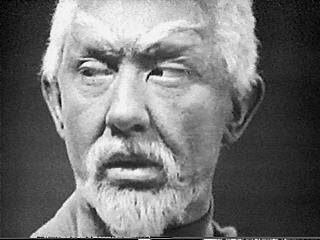 Mavic Chen was a posturing idiot, but an interesting villain- not so much for any uniqness of his own, but for the actor and writer's portrayal of his visible slow decent into madness- from a humble servant to a raving loon in 12 chapters. The character was cliche, but the actor made him work well.
Steven was in top form- heroic, sarcastic (and funny)- and interestingly enough, arrogant. He's very sure of his ability to operate superior technology that he doesn't understand- a trait that continues on in the next serial, when he is certain that all he needs is the TARDIS key to leave; assuming the ship's operation will come naturally to him. This arrogance and tendency to brashly rush ahead add needed depth to his character, keeping him from Mary Sue status and making him nicely fallible. His heroic traits mesh well with his incautious ones, making him a flawed but heroic figure- always rushing in to do the right thing- even if it's presumption on his part what the 'right thing' is at times.
Katarina, as a one-trick pony, is wisely- if tragically- played off early on, before she can become a sour note in the series. She fills her role- primitive in the future world- and then plays an important plot function (within a contrived plot, admittedly), exiting before she can become tiresome. I liked her. She also lasted one episode past when I had her pegged to die.
The Doctor is resolute and resourceful in this episode, sneaking in as one of the delegates to steal the core, commandeering spaceships, eulogizing, outwitting the Monk yet again in a comic high-point, masterfully engineering a standoff with the Daleks, and forcing his way on, step after step, as the time destructor ravages his body. Although he has less crucial to do in this serial than that description makes it sound, he is in top form.
 Likewise, the reconstruction is as top-notch as the story- all of the stops are pulled out, with CGI Daleks, stock footage, still-frame enhancement (making doors slide open with accurate shadows on floor and ground- and that absolutely luscious, astounding background work for the Volcano, which, while technically simple to achieve, is visually stunning and sets an excellent tone), insert shots, plus the standard stills and the like- plus crucial episodes 2 (The Delegates, the Doctor in the meeting, stealing the core, and also Katarina's only surviving video footage), 5 (With the acid-trip transportation sequence, Kingdom's character development, and Dalek invisible-exterminations) and 10 (The monk, the TARDIS sabotage, and the explosive finale) survive in video form.
All in all, this serial truly deserved the title of an epic. It was ambitious- and by far and large, accomplished what it set out to do. It was the longest Serial in Doctor Who (the sort of Miniseries-of-Serials-with-a-common-theme known as The Trial Of A Timelord, A.k.a. A season-long serial, A.k.a. pretty-much-Collin-Baker's-entire-run-as-the-Doctor nonwithstanding) and yet it kept the pace better than a number of 3 and 4 parters did! (I'm glaring accusingly at you, Galaxy 4!) It seldom lagged, seldom disappointed, had all the tension and excitement and humor you could want, killed off a companion- a first for the show (and then a second and third before all was said and done for this serial!), visited numerous exotic locales (including at least 3 jungle planets that all looked identical) and all in all was an extremely entertaining, satisfying ride. It was fun and engaging- what more can you ask of a story? (Well... whatever it is, Dalek Master Plan had that, too.)
Great moments:
In a serial filled with great moments, the hyper-aging finale, the amazing volcanic p Katarina’s sacrifice, and the Doctor’s sabotage (again) of the Monk’s TARDIS all stand out- but are hardly a complete listing.
Rating:
Both the Serial itself, and the Loose Canon reconstruction, receives a well-deserved 5 out of 5 Chumblies! No, scratch that... anything from Galaxy 4 is unworthy of The Dalek Master Plan.

This serial receives 5 out of 5 Time Destructors, not aging it to death, like poor Sara Kingdom, but to perfection, like a seasoned wine. And while the ravages of time have indeed torn at it, it remains, like the Doctor, a strong survivor of those ravages, and the Loose Canon- while never a desired alternative to full video- complements this work excellently. Full marks to production teams past and present for really pulling off a master work on this one (and receiving their own 5 of 5 rating)!
(Sorry for the 'epic'ly long review!)


 forest aboard the Ark, the last refuge for humans (and their allied species, the Monoids, mute alien immigrants to Earth whose planet was destroyed) as Earth itself, nearing the sun, prepares to bite the dust. Well, okay, bite the flaming thermonuclear fusion.
  forest aboard the Ark, the last refuge for humans (and their allied species, the Monoids, mute alien immigrants to Earth whose planet was destroyed) as Earth itself, nearing the sun, prepares to bite the dust. Well, okay, bite the flaming thermonuclear fusion.
 The group is quickly captured by the now-speaking, now dominant Monoids, who have gone one step further and made the human population of the Ark into slaves- exploiting a genetic weakness introduced into the humans by a second, unexpected outbreak of the plague soon after the TARDIS crew left. The now-dominant Monoids still intend to settle Refusis- but do not intend to invite any humans along for the ride.

 appearance here.) (NFS: A. I think it's totally a Doctor Who thing to have infuriating "court" scenes that would be better suited to the world of Lewis Carol, and B. Dodo is totally the most annoying companion we've had YET! Agreed.)
 not sterling. The Refusians are an interestingly characterized, mild-mannered non-corporeal bunch that added life into the story. The notion of the Doctor believing he's fixed things when he's actually worsened them is revisited (or hearkens back to, for those introduced to the show by the modern series) the New Who 'The Long Game/Bad Wolf' story arc. (New Who fans can also imagine that the Earth streaking across the sky trailing smoke was simply a more primitive effects rendition of the events in End of the World, and that even as the Ark watches from afar, Platform One is sitting back in orbit, observing, as Lady Cassandra does in the Moxx of Balhoon and Jabe fails to use her liana from a distance or any heavy object and the doctor fails to use his time-meditation powers that he uses just a minute later in a dramatic conspiracy to kill of the first of many one-time companions.)
 story- and unfortunately, his trial defense is rather pathetic. But at least he tries. He does the most, but accomplishes the least.
 agonized about bringing about the plague deaths, Ian would have actively worked on some bit of forgotten cure knowledge, Vicki might well have been a humorous source of supposed knowledge about the location proved to be wrong, and New Who companion Rose already explored the psychological ramifications of being introduced to the much larger world(s) of time and space travel in the aforementioned End of the World, which may theoretically be happening parallel to these events (at least thematically, with Earth's destruction by the sun, if nothing else.) Dodo did none of these, simply using up space and running time as an uninteresting nonentity. One can only hope her role will improve in future. (NFS: I wouldn't hold my breath...or yours. Although I am unfairly writing from the future in which I KNOW for a fact Dodo does not improve...at all.)


